Quick answer
A Rabat day trip from Casablanca is easy: the capital is about 90 km away by motorway, roughly 1 hour to 1 hour 15 minutes off-peak, or about an hour by train. Leave around 8 am and you can see the Kasbah of the Udayas, Hassan Tower, the Mausoleum of Mohammed V, the Chellah and the medina before heading back in the early evening.
- Distance
- ≈ 90 km by motorway
- Drive time
- 1 h to 1 h 15 off-peak
- Train
- ≈ 1 hour, frequent departures
- Alfa one-way transfer
- 900 DH per vehicle
- Full-day driver
- 1,800 DH, 200 km included
- UNESCO World Heritage
- Since 2012
Many travellers fly into Casablanca and head straight for Marrakech, skipping Rabat entirely. That is a shame. Morocco's capital is barely an hour up the coast and rewards you with a calm, walkable medina, ocean-facing ramparts, beautifully kept gardens and some of the country's most striking monuments. This guide covers how to get there, how much time you really need and how to plan a full day without rushing.
Casablanca to Rabat is a route our drivers know by heart, so the advice below comes from experience on the ground, and the site details come from public sources. Opening hours and ticket prices do change, though, so it is always worth a quick check before you set off.
How do you get from Casablanca to Rabat?
Rabat lies about 90 km northeast of Casablanca. You have three realistic options, and each suits a different kind of traveller.
Driving on the coastal motorway
The Casablanca to Rabat motorway (A1) follows the Atlantic coast via Mohammedia and Bouznika. Off-peak, allow 1 hour to 1 hour 15 minutes centre to centre. Between roughly 7:30 and 9:30 am, and again in the late afternoon, getting out of Casablanca and into Rabat can add 20 to 40 minutes. If you are staying in Sidi Maarouf, in southern Casablanca, add about 15 minutes.
Taking the train
The train is the budget-friendly choice. Al Atlas trains run from Casa Voyageurs or Casa Port to Rabat Ville in about an hour, with frequent departures from early morning until the evening. Some Al Boraq services also stop at Rabat Agdal from Casa Voyageurs. Indicative fares start around 40 DH in second class and 70 DH in first, but they vary by train and date, so check the national rail operator's website or app before you travel.
The catch on a day trip is what happens after you arrive. Rabat's main sights are spread out, from the Chellah in the south to the Kasbah on the river mouth, so you will spend part of the day hailing petits taxis.
Hiring a private driver
A driver collects you from your hotel, drops you at the door of each site, waits while you visit and brings you back in the evening. For families, small groups and anyone who wants to make the most of their time, it is the most relaxed way to do the trip.
| Option | Door-to-door time | Indicative cost | Best for |
|---|---|---|---|
| Al Atlas train + petits taxis | 1.5 to 2 hours with connections | ≈ 40 to 75 DH per person by train, plus taxis | Solo travellers on a budget |
| Alfa one-way transfer Casablanca → Rabat | 1 h to 1 h 15 | 900 DH per vehicle, 1 to 7 passengers | One-way trips, staying overnight, returning by train |
| Alfa full-day driver | The whole day, with waiting | 1,800 DH per vehicle, 200 km included | Same-day return, families, groups |
Why the full-day hire usually covers the round trip
A Casablanca to Rabat round trip is about 180 km of motorway, plus whatever driving you do between sites in Rabat, typically 15 to 25 km. Our full-day hire at 1,800 DH includes 200 km, so in most cases the whole day fits within the allowance, waiting time included. If you start from Sidi Maarouf, add a detour or stretch the programme, each kilometre beyond 200 is charged at 10 DH. Your driver confirms the mileage at the end of the day, so there are no surprises.
For comparison, two one-way transfers (there and back) would also cost 1,800 DH, but without the waiting or the driving around Rabat. That is why the full-day option is usually the logical choice.
A timed Rabat itinerary for one day
This plan leaves Casablanca around 8 am and returns in the early evening. It follows a sensible geographical order to avoid zigzagging across the city.
9:15 am: Kasbah of the Udayas and the Andalusian Gardens
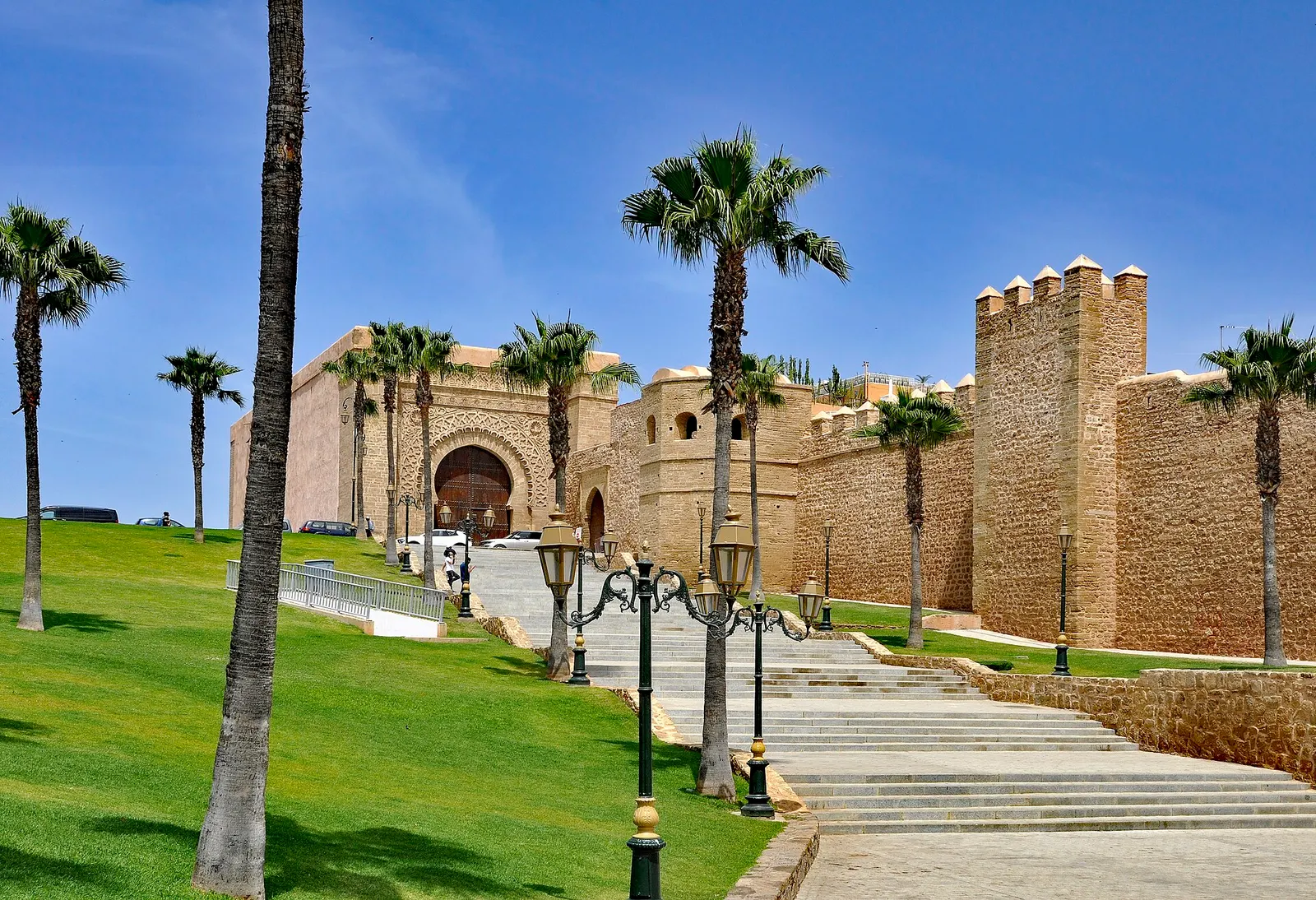
Start at the Kasbah of the Udayas, the fortified citadel overlooking the mouth of the Bouregreg river. Its origins go back to the Almohad dynasty in the 12th century. Walk in through the monumental gate, then wander the blue-and-white lanes up to the old signal platform, where you look out over the ocean and across to Salé.
On the way down, take a break in the Andalusian Gardens, a walled garden of orange trees and bougainvillea laid out much later than the kasbah itself. Mornings here are quiet and the light is lovely for photos. Allow about 1 hour 15 minutes.
10:45 am: Hassan Tower and the Mausoleum of Mohammed V
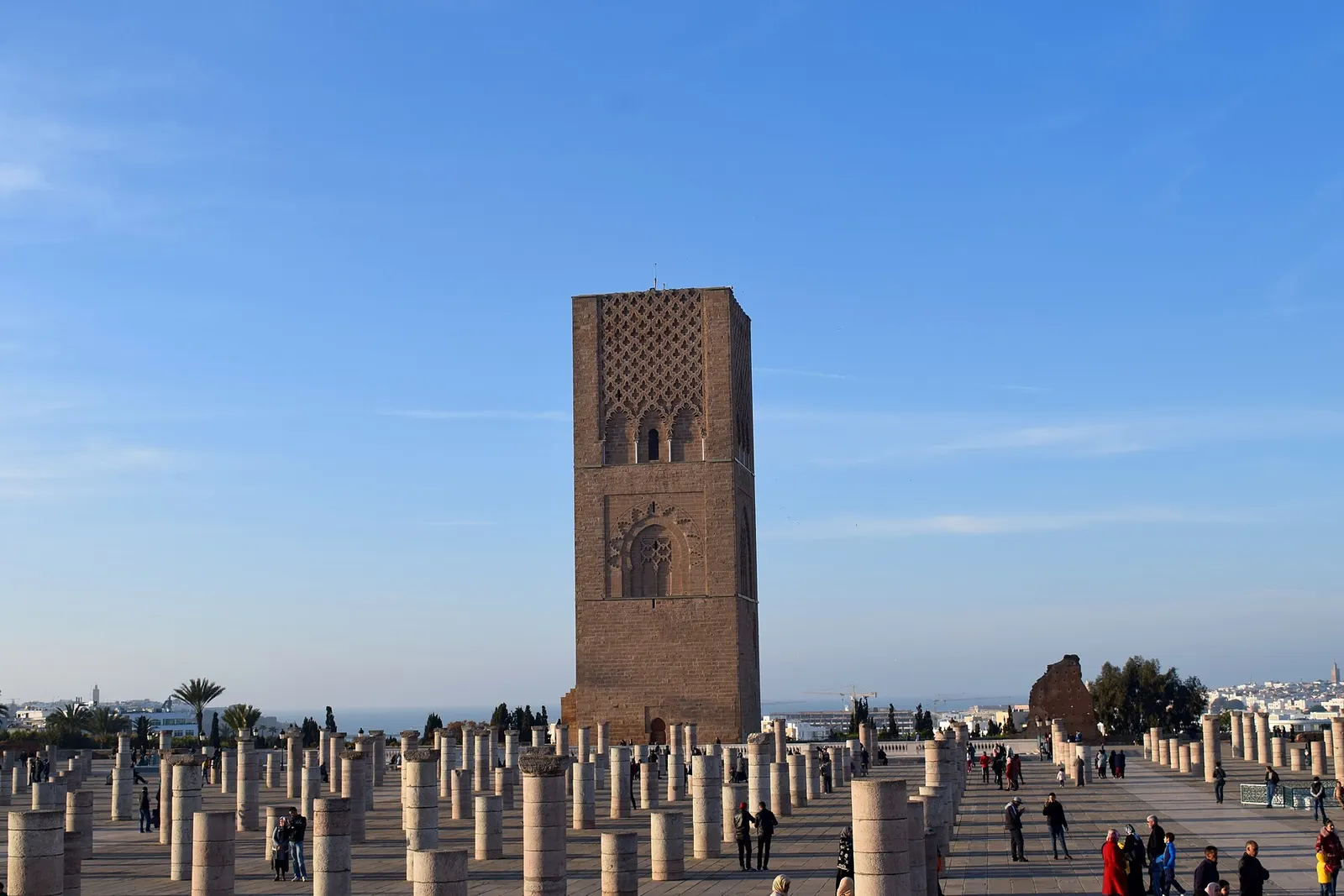
A short drive brings you to the Hassan Tower esplanade. This unfinished minaret, about 44 metres tall, was meant to crown a vast mosque commissioned by the Almohad sultan Yaqub al-Mansur in the late 12th century. Work stopped when he died, leaving the tower and a field of column stumps that still give a sense of the planned scale.
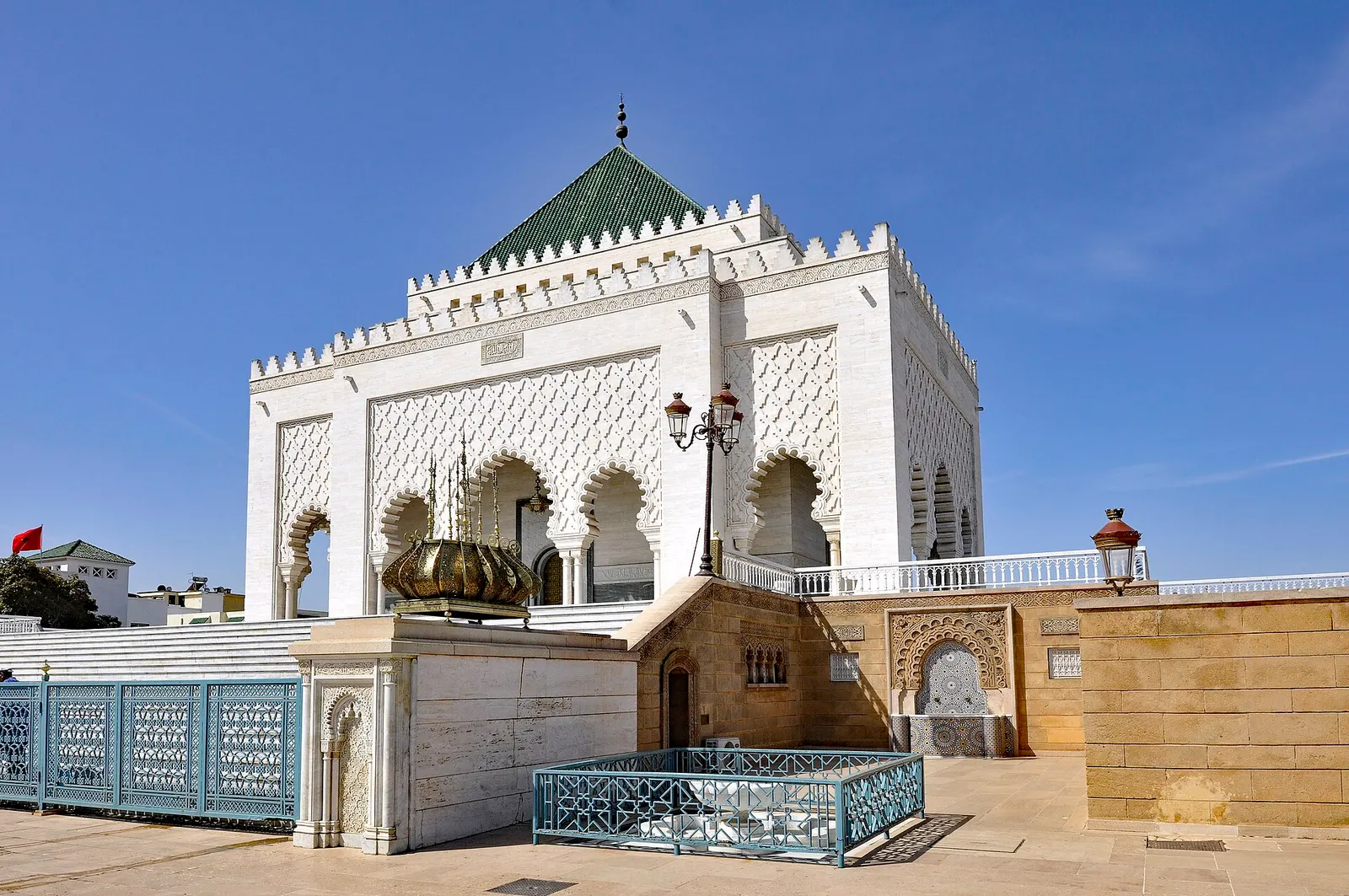
Facing it stands the Mausoleum of Mohammed V, where King Mohammed V lies alongside his two sons, King Hassan II and Prince Moulay Abdallah. Entry is free and it is open daily during the day. Royal guards in ceremonial uniform stand at the entrances and are one of the most memorable sights of the day.
This is a place of remembrance, so:
- wear clothing that covers shoulders and knees;
- keep your voice down and follow the guards' instructions;
- ask before taking close-up photos of the guards.
12 noon: the Chellah
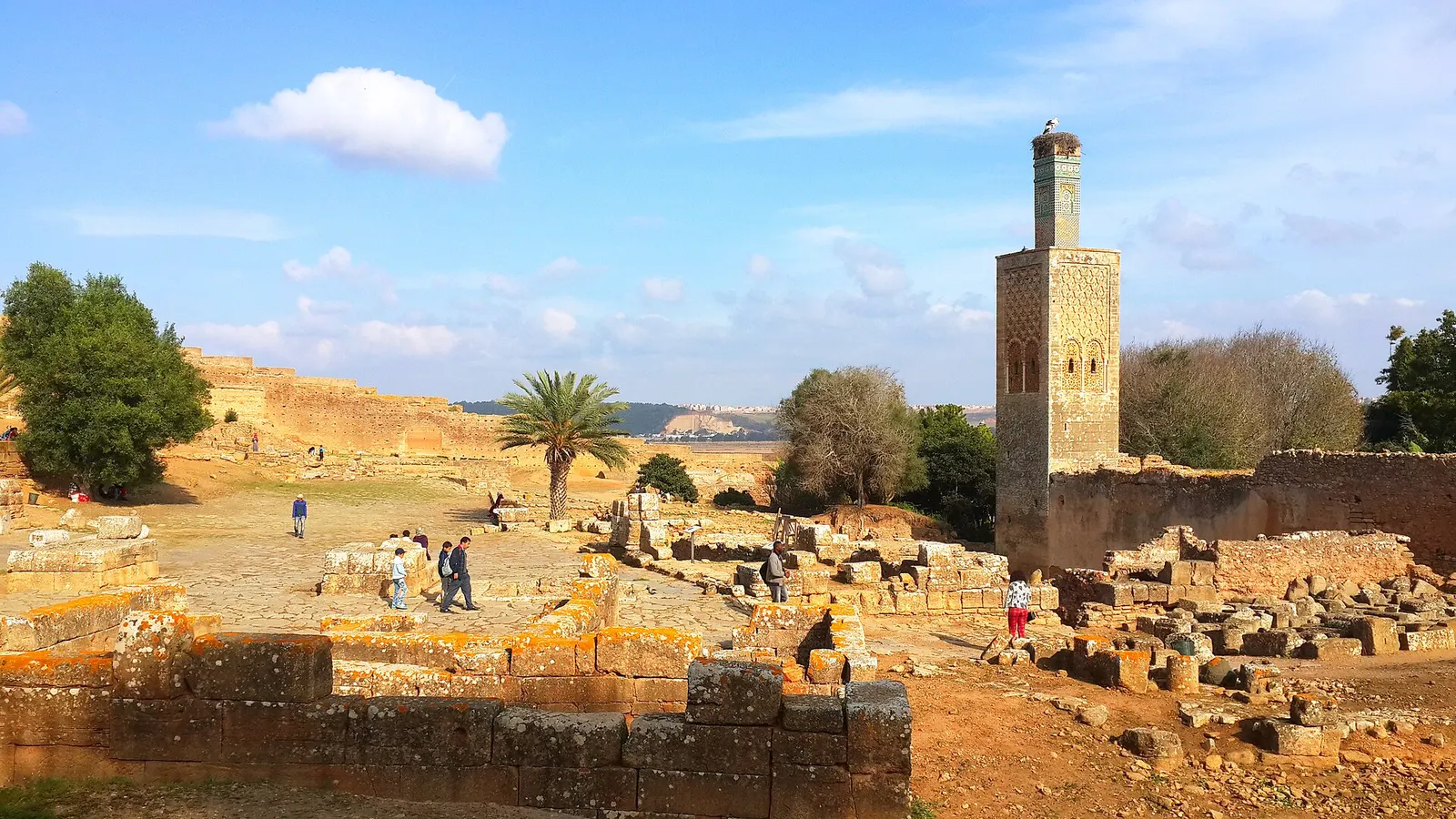
The Chellah combines the remains of the ancient city of Sala, a 14th-century Marinid necropolis, gardens, a pool and storks nesting on the ruins. After three years of restoration, it reopened in spring 2024 with a new visitor route and an audio guide.
At the reopening, standard tickets were announced at 70 DH and audio-guided visits at 120 DH, with a 50% discount for Moroccans and residents. Opening hours vary with the season and are shorter during Ramadan, so check current hours and prices on the Chellah's official website before you go. Allow about an hour.
1:15 pm: lunch
After the Chellah is the natural time for lunch. See our tips on where to eat further down.
2:45 pm: the medina and Rue des Consuls
Rabat's medina is smaller and far more relaxed than those of Fez or Marrakech, which makes it a pleasure to explore. Rue des Consuls, once home to foreign envoys, is now lined with carpets, leather goods, babouches and crafts. Sellers here are generally less pushy than elsewhere. Allow an hour.
4 pm: Bouregreg marina, Salé and the Mohammed VI Tower
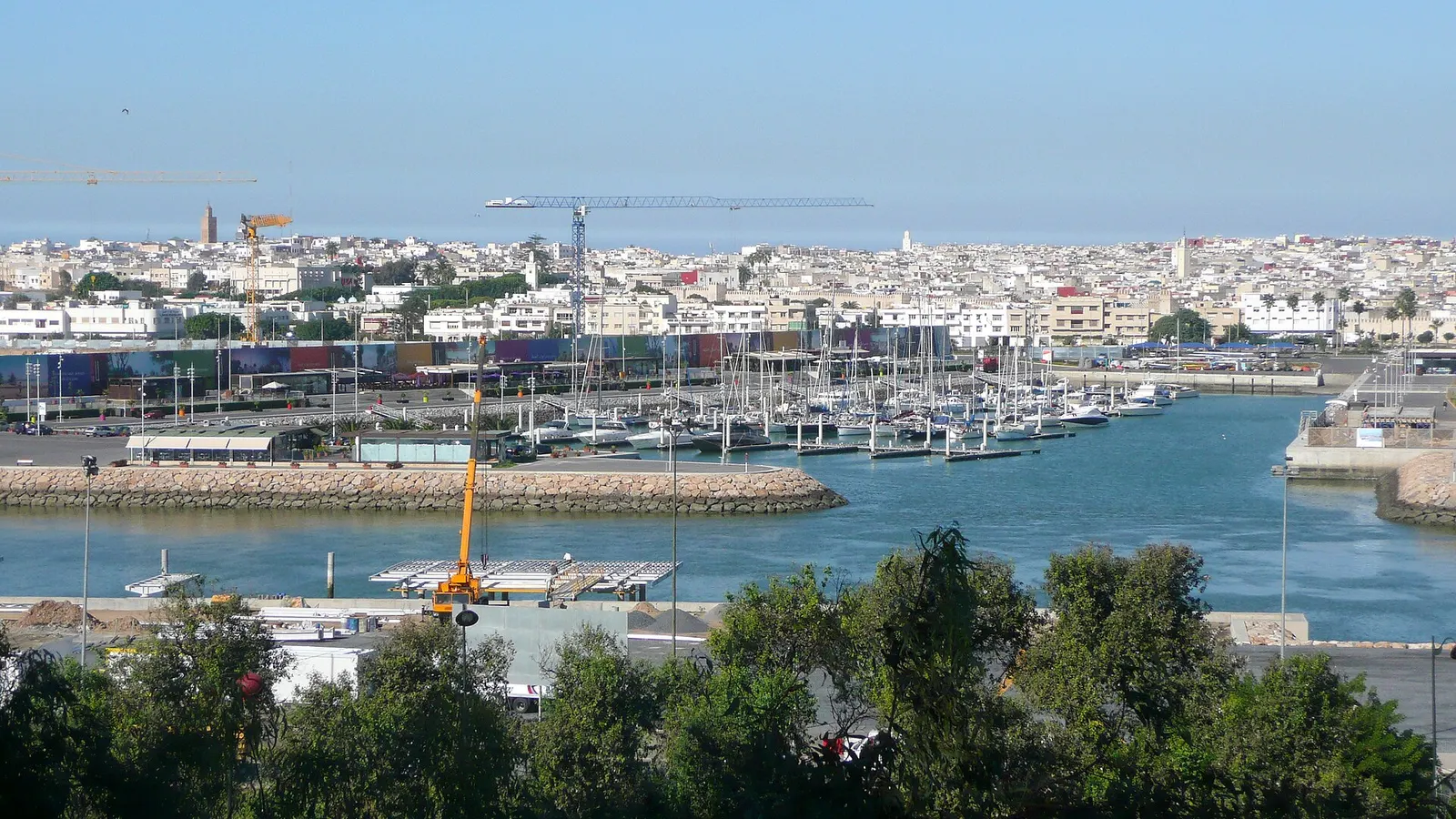
Your driver then takes you to the Bouregreg riverside. The marina on the Salé bank is ideal for a stroll and a mint tea on a terrace facing the Kasbah. Traditional rowing boats sometimes still ferry people between the two banks.
From the riverside you will see the Mohammed VI Tower in Salé. At 250 metres and 55 floors, it is the tallest building in Morocco, housing a hotel, offices and residences. There is no need to plan a visit; the view from the river is enough.
Museum option: Mohammed VI Museum of Modern and Contemporary Art
Art lovers can swap the marina or the medina for the Mohammed VI Museum of Modern and Contemporary Art in the city centre. It showcases 20th-century Moroccan painting and hosts strong temporary exhibitions. It is usually open 10 am to 6 pm and closed on Tuesdays, with a paid entry whose price varies with exhibitions, so check ahead.
5:15 pm: heading back, with an optional stop in Mohammedia
On the way back, Mohammedia sits right on the motorway, about 20 km before Casablanca. An hour there gives you time for a walk along the seafront and an early dinner, fresh fish being the obvious choice. The detour adds very few kilometres and usually stays within the full-day allowance. If you would rather stay in Mohammedia, a one-way transfer from Casablanca costs 400 DH per vehicle.
Is Rabat a UNESCO World Heritage Site?
Yes. Since 2012, Rabat has been on the UNESCO World Heritage List as 'Rabat, Modern Capital and Historic City: a Shared Heritage'. The listing brings together the Kasbah of the Udayas, the medina, Hassan Tower, the Mausoleum of Mohammed V, the Chellah and parts of the new town planned in the early 20th century. What UNESCO recognised is that unusual blend of ancient heritage and modern urban planning.
Where to eat in Rabat on a day trip
Specific addresses change quickly, so here are the areas where you will easily find a good meal:
- Around the Kasbah of the Udayas: a historic terrace café above the river, perfect for mint tea and Moroccan pastries.
- In and around the medina: simple local restaurants for tagine, harira soup or grilled skewers at modest prices.
- Agdal and the city centre: more contemporary restaurants serving modern Moroccan or international food.
- Bouregreg marina: waterside terraces with fish and seafood, ideal for a late-afternoon break.
If you have preferences or dietary needs, ask your driver; they know reliable places for every budget.
When is the best time to visit Rabat?
Spring (March to May) and autumn (September to November) offer the most comfortable walking temperatures. Summer is manageable thanks to the Atlantic breeze, while winter is mild but can be rainy. Whatever the season, start early: the sites are quieter in the morning and the Kasbah looks its best in the soft light.
Visiting Rabat on a Friday
Friday is the day of the main weekly prayer. Around midday, roughly 12:30 to 2 pm, some medina shops close for a while and traffic builds near the mosques. Working mosques are not open to non-Muslim visitors. On a Friday, see the open-air sites in the morning and keep the medina for later in the afternoon. On a Tuesday, remember the modern art museum is usually closed.
Practical tips for your Rabat day trip
- Leave around 8 am to beat the worst traffic and arrive as the sites open.
- Wear comfortable shoes: the Kasbah and the Chellah involve slopes and cobblestones.
- Bring modest clothing or a light scarf for the mausoleum.
- Carry small change for tickets, tips and small purchases.
- Pack water and a hat in summer, even when the breeze feels cool.
- Leave your bags in the vehicle: with a driver, you can explore light.
To round off your trip, read our guide to things to do in Casablanca, and if you are heading north next, our Fez, Chefchaouen and Tangier itinerary. Just landing in Morocco? Start with our Casablanca airport arrival guide.
How Alfa Evasions can help
Alfa Evasions is a private tourist transport company based in Quartier Florida, Sidi Maarouf, Casablanca, and the transport partner of the Casablanca Suites & Spa hotel. Our licensed drivers operate Hyundai Staria and Renault Trafic vans for 1 to 7 passengers, with free on-board Wi-Fi and a welcome basket with water and treats.
For Rabat, choose between a full-day driver at 1,800 DH, with 200 km included and 10 DH per extra kilometre, or a one-way Casablanca to Rabat transfer at 900 DH per vehicle. Prices are from our 2025 rate card. We are available 24/7: message us on WhatsApp at +212 641 99 11 13 or call +212 522 97 20 52.